
Spring type and condition
The inspection identifies torsion or extension hardware and looks for broken coils, rust, distortion, previous mismatching, and signs of fatigue.
Serving Bushnell, Florida
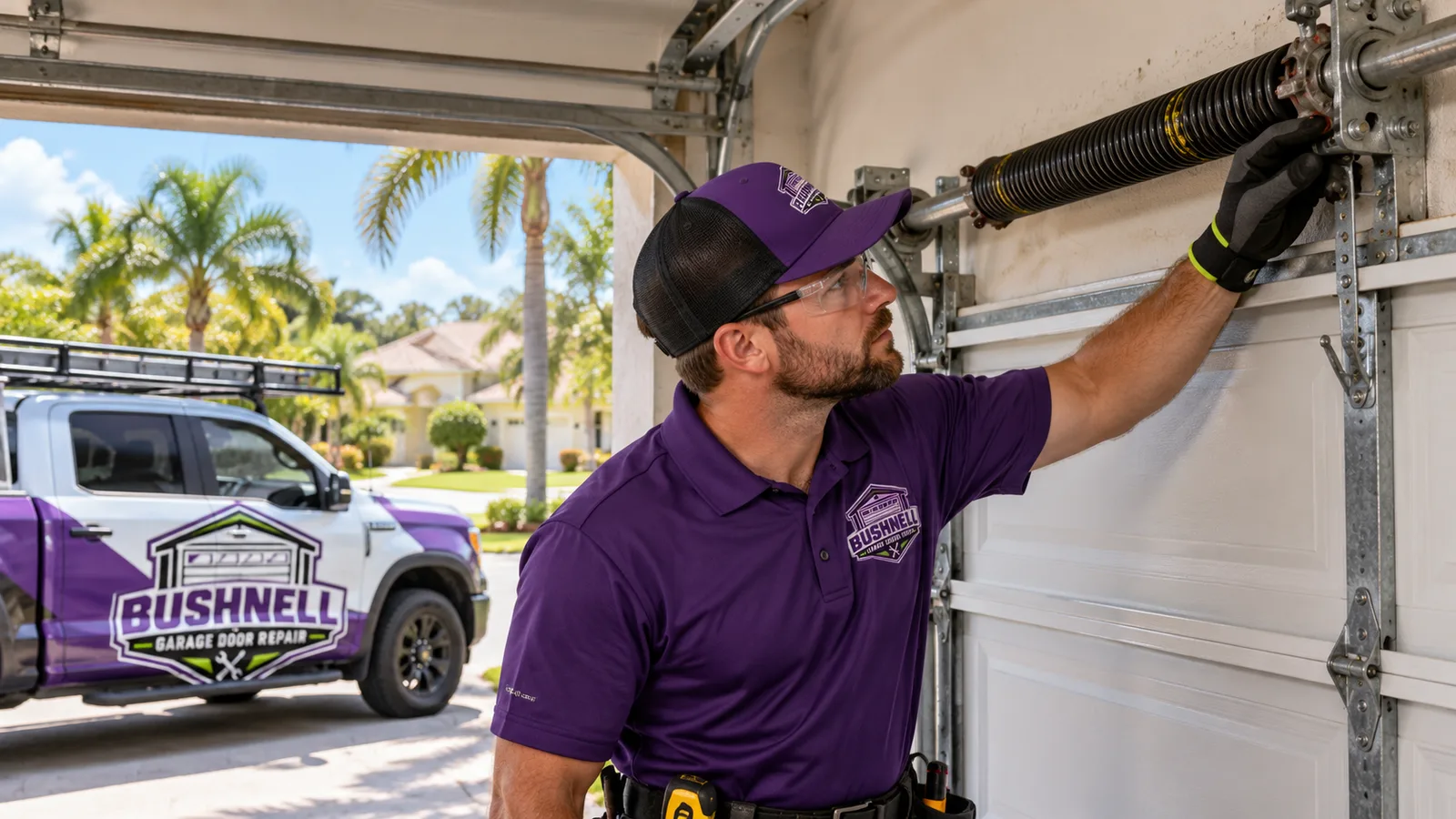
Restore balanced movement, reduce strain on the opener, and get a clear repair plan for a broken or worn spring.
A broken garage door spring can leave the door too heavy to lift safely. I provide garage door spring repair in Bushnell, FL for doors that will not open, rise unevenly, close hard, or make a sharp bang when a spring breaks. The work starts with identifying the spring system, checking the door's balance, and determining whether a spring is broken, fatigued, incorrectly sized, or affected by another worn component.
Garage door springs store substantial mechanical energy. Torsion springs are mounted on a shaft above the door, while extension springs stretch along the horizontal tracks. Both systems counterbalance the door's weight. The opener guides a properly balanced door, but it should not have to lift the full load. Continuing to run an opener after a spring failure can damage the opener, bend hardware, pull a door out of alignment, or allow the door to fall.
Bushnell's warm, humid conditions can contribute to surface corrosion on springs and hardware, particularly in garages with limited airflow. Routine visual checks can reveal rust, stretched coils, frayed cables, or a visible gap in a torsion spring before further operation causes more damage.
A visible gap in the coils is a common sign of a broken torsion spring. With an extension system, one spring may hang loose or appear stretched when compared with the spring on the opposite side. Other warning signs include a door that lifts several inches and stops, a crooked door, loose lifting cables, unusually fast closing, or an opener that strains without moving the door.
A loud bang from the garage can be the spring releasing its stored tension. The door may remain closed afterward, even though the opener motor runs. Avoid repeated attempts to open it. Do not pull the emergency release while the door is open or partly open because an unsupported door can drop.
Spring symptoms sometimes overlap with cable, roller, track, or opener problems. A hands-on inspection separates the failed part from the secondary damage. For broader problems that extend beyond the spring system, garage door repair in Bushnell can include an assessment of the connected door hardware.
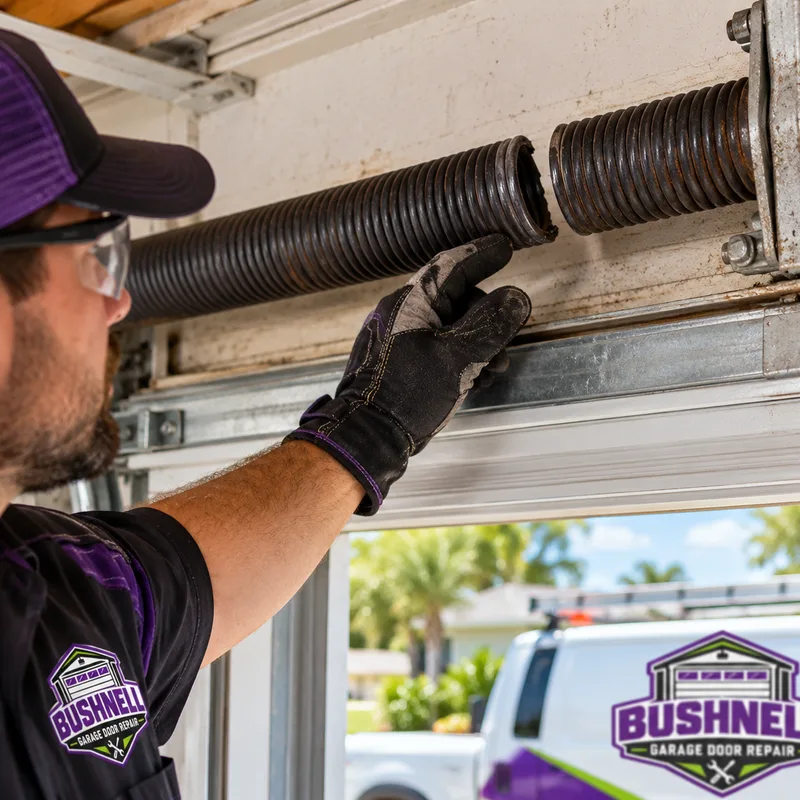
The inspection identifies torsion or extension hardware and looks for broken coils, rust, distortion, previous mismatching, and signs of fatigue.
Replacement springs must match the door's actual lifting requirements. Door size, construction, insulation, windows, and added reinforcement can affect weight.
Lift cables wind around drums as a torsion shaft turns. Frayed cables, damaged drums, or incorrect cable seating can make the door rise unevenly.
End bearings, center bearing plates, brackets, and the torsion shaft are checked for movement, wear, or damage that could interfere with operation.
Binding rollers, loose hinges, and track misalignment add resistance. Correcting related problems helps the repaired spring system move the door consistently.
After the door is balanced manually, the opener can be checked for normal travel and force. Spring tension should not be used to hide an opener fault.
Step 1 of 5
Stop operating the door and keep people, pets, and vehicles away from it. If the door is open or crooked, do not stand or walk beneath it.
Step 2 of 5
I check the spring arrangement, door weight factors, cables, drums, bearings, tracks, and opener connection before setting the repair scope.
Step 3 of 5
The spring is matched by system type and lifting requirements. Torsion spring selection can involve wire size, inside diameter, coil length, wind direction, and the number of springs used.
Step 4 of 5
The failed spring is removed with the proper winding tools and the replacement is installed. Torsion springs are wound in controlled quarter turns, while extension systems require properly routed safety cables.
Step 5 of 5
The door is moved by hand to verify that it stays balanced through its travel. The opener is then reconnected and tested only after the manual movement is acceptable.
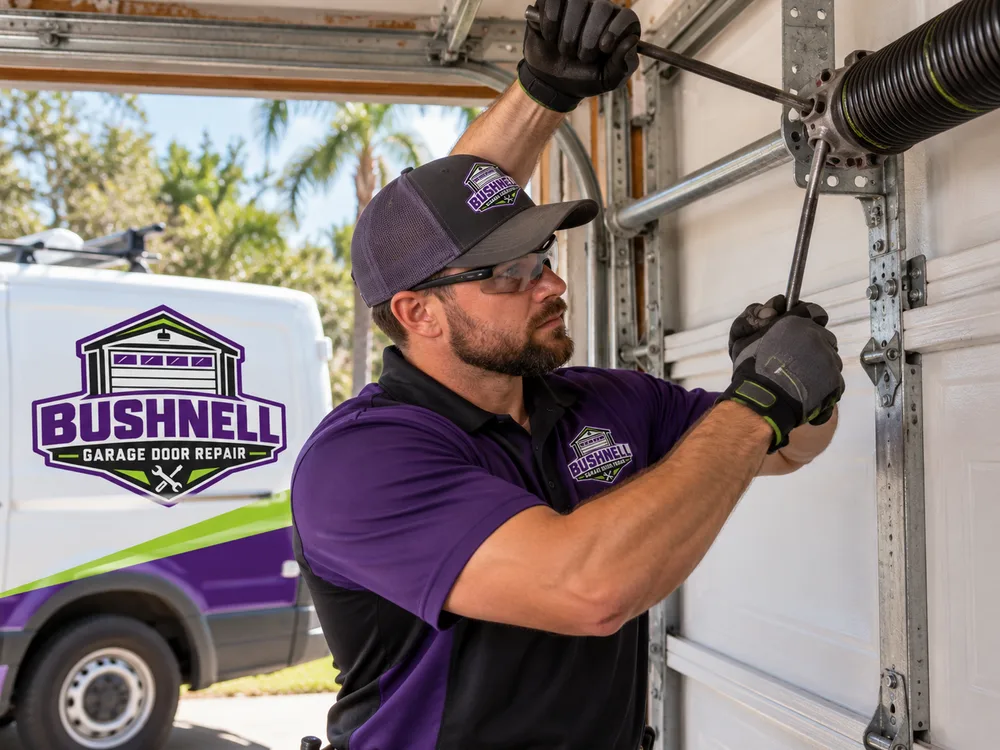
A spring is not chosen by appearance alone. Torsion springs that look similar can have different wire diameters, lengths, inside diameters, and wind directions. Those differences determine torque and how the spring supports the door. An undersized spring may leave the door heavy. Too much tension can make it rise on its own and interfere with safe closing.
Many residential doors use a pair of torsion springs. If one breaks, the other may have experienced a similar amount of use. Whether both should be replaced depends on their condition, specifications, and installation. What we replace should follow inspection rather than a blanket rule.
Bushnell homes may have steel, wood, insulated, or windowed garage doors, and those construction differences affect total weight. Added struts or replacement panels can also change the load. The useful test is the completed door's balance: when disconnected from the opener and handled safely, it should move smoothly and remain controlled at different positions.
Do not loosen set screws, cut cables, remove brackets, or insert improvised tools into a winding cone. Winding bars are made to fit the cone securely; screwdrivers and other substitutes can slip under load. Extension springs also require care because they stretch under tension and can move violently if hardware fails.
If a vehicle is trapped inside, forcing the door upward is risky. A garage door can weigh hundreds of pounds depending on its size and construction, and a person lifting it may not be able to control it if cables shift or the remaining spring releases. Leave the door closed when possible and describe the door position when arranging service.
After repair, basic observation can help identify future trouble. Listen for scraping, watch whether the bottom edge stays level, and note whether the opener suddenly sounds strained. Lubrication intended for garage door springs and moving hardware can reduce friction, but it cannot restore a fatigued or broken spring. Avoid heavy grease that collects grit on exposed parts.
It is safest to leave the door closed until the spring system is inspected. A broken spring removes much of the counterbalance, so the door may be extremely heavy, rise crooked, or fall after being lifted. If a vehicle is trapped at a Bushnell property, explain the door's position and spring type when arranging service rather than forcing it open.
Matched springs are often considered together, but the right choice depends on the system's design and the condition of the unbroken spring. If both were installed together and have comparable wear, replacing the pair may prevent another interruption soon afterward. I can inspect the specifications and condition before recommending the repair scope.
The spring is often the cause when the opener runs but the door barely moves or feels very heavy by hand. The opener is designed to move a balanced door, not replace the spring's lifting force. Testing the door manually after it is safely disconnected helps separate a spring problem from an opener fault.
Describe whether the door is open or closed, whether a spring has a visible gap, and whether the system has springs above the door or along the tracks. Door width, material, windows, and any loose cables are also useful details. Photos can help identify the general system, though final spring selection requires an on-site inspection.
Surface rust alone does not always mean immediate failure, but a cracked, stretched, deeply corroded, or broken spring cannot be restored with lubricant. Central Florida humidity can contribute to corrosion on exposed garage hardware. An inspection can determine whether the spring remains serviceable or needs replacement.
Tell me what the door is doing, whether it is stuck open or closed, and what you can see around the springs and cables. That information helps prepare for a focused inspection and a clear repair plan.