A roller is outside the rail
Even one displaced roller can make the door bind and place extra force on hinges, brackets, and other rollers.
Serving Bushnell, Florida
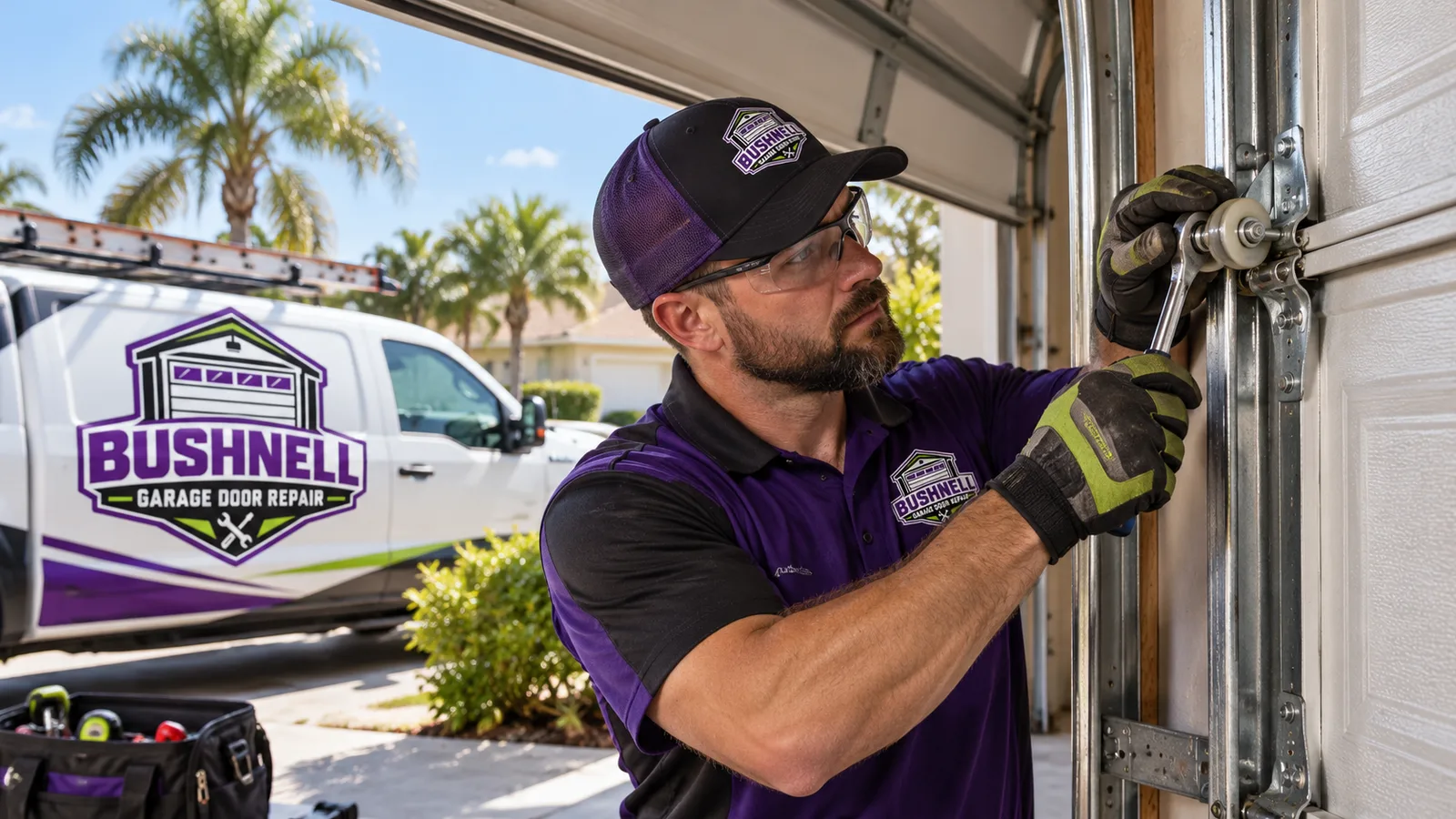
Restore safe, smooth door travel with a careful inspection, proper track realignment, and replacement of damaged hardware when needed.
Garage door off track repair in Bushnell, FL starts with securing the door and finding out why the rollers left their tracks. I check the track alignment, rollers, hinges, lift cables, brackets, fasteners, and door panels before recommending the work.
Do not run the opener or try to force a crooked door closed. A door that has partly left its tracks can bind, twist, or drop farther. The opener is built to move a balanced door, not pull a jammed one back into position. Keep people and vehicles clear of the opening, leave the door where it is, and arrange an inspection.
Bushnell's humid weather and frequent summer rain can contribute to corrosion on unprotected hardware. Wind-driven debris or an accidental impact can also bend a track or knock it out of alignment. The repair should address the cause rather than simply pushing a roller back into place.
A roller may leave the track after a vehicle, mower, or stored item strikes the door or vertical track. Loose track brackets can allow the rails to shift. Worn rollers may tilt or bind, and a damaged hinge can change the angle at which a roller enters the curved track.
A lift cable problem is another serious cause. If one cable slips, frays, or loses tension, one side of the door may rise while the other side remains low. That uneven load can pull rollers out and leave the door hanging at an angle. Bent panels may create similar trouble because the roller stems no longer travel in their intended line.
The visible gap is only part of the diagnosis. Track spacing, plumb, bracket attachment, roller condition, cable position, panel damage, and door balance all need attention. If the door has a separate opener or spring problem, broader garage door repair in Bushnell may be needed after the off-track condition is made safe.
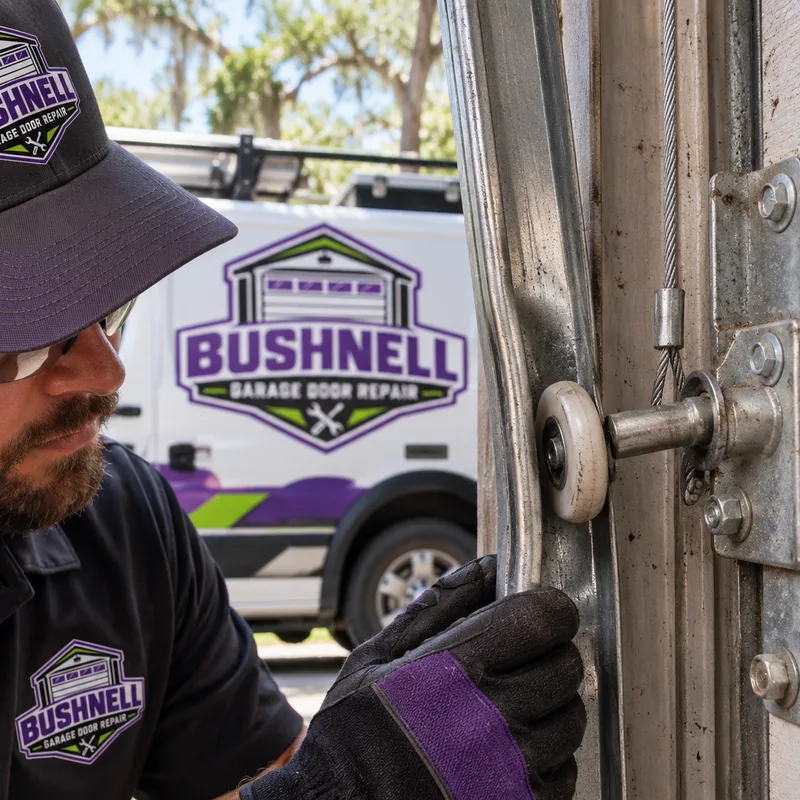
Even one displaced roller can make the door bind and place extra force on hinges, brackets, and other rollers.
An uneven bottom edge may point to a cable, track, roller, or panel problem. Keep clear of the opening.
Lift cables operate under significant tension. Do not pull, cut, or wind a displaced cable.
A distorted rail or loose mounting point may no longer guide the roller safely through the door's travel.
Metal-on-metal noise often means a roller or panel edge is rubbing because alignment has changed.
Repeated attempts can strain the opener while worsening a mechanical jam. Disconnecting it does not make an unstable door safe to lift.
Step 1 of 5
I first prevent movement and check whether the door is supported safely. A suspended or sharply tilted door requires particular care.
Step 2 of 5
The inspection follows the full path of travel and checks rollers, hinges, tracks, brackets, cables, panels, and fasteners for damage or displacement.
Step 3 of 5
Reusable tracks are brought back to the correct spacing and position. Bent rails, damaged rollers, failed hinges, or compromised hardware are replaced when realignment alone would not provide dependable travel.
Step 4 of 5
Once the cause has been corrected, the rollers are seated properly without forcing them through a damaged or misaligned section.
Step 5 of 5
The door is moved through its operating range to check alignment, clearance, balance, cable tracking, and opener operation. Any remaining rubbing or binding is corrected before normal use resumes.
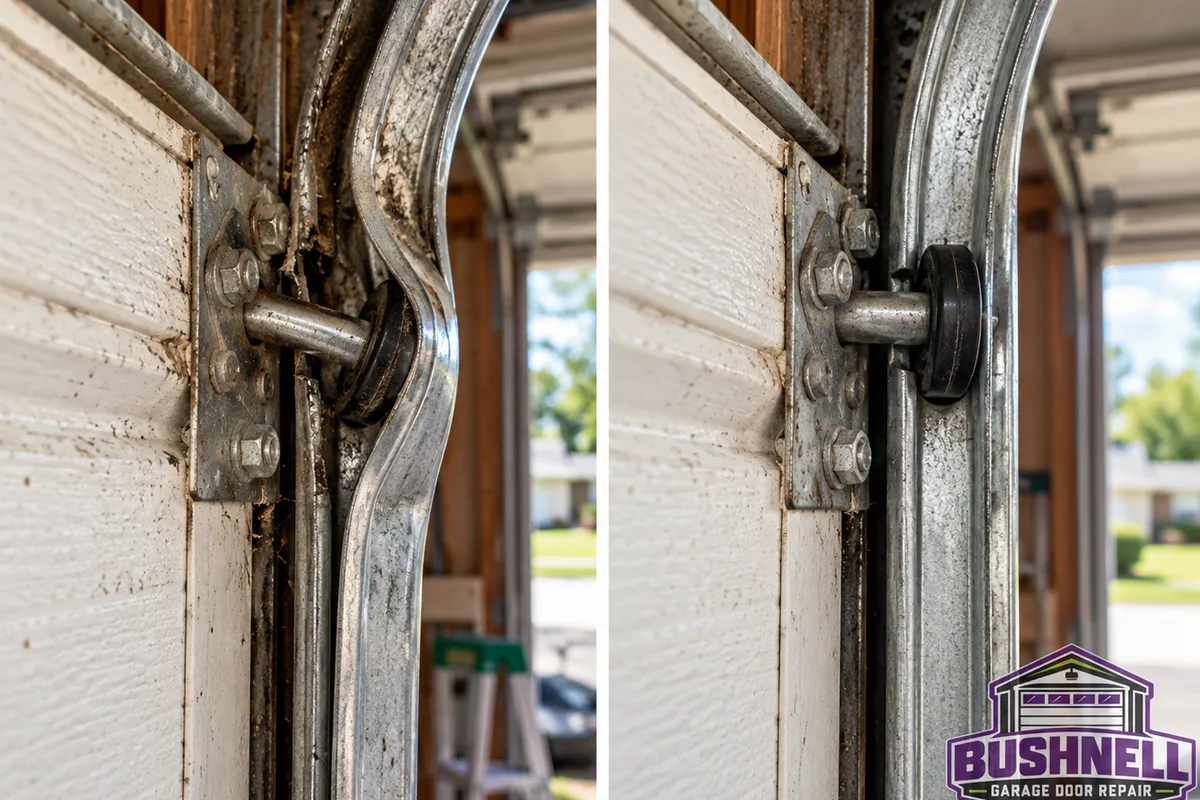
A track that has shifted at its brackets may be reusable if it is straight, structurally sound, and capable of holding the correct spacing. Minor distortion can sometimes be corrected, but a rail with a sharp crease, split edge, elongated mounting hole, or severe impact damage may need replacement.
Rollers also need individual attention. A worn bearing, cracked nylon wheel, bent stem, or excessive side play can cause another derailment even after the rails are aligned. Hinges should hold the roller stems at the intended angle, and fasteners must grip their mounting points securely.
Panel condition matters because tracks cannot compensate for a door section that is badly bent or separating. If cable tension is uneven or spring hardware appears damaged, that work requires the correct tools and handling procedures. The goal is stable, unrestricted travel, not a temporary cosmetic adjustment.
Stop using the wall control and remote as soon as the door becomes crooked, noisy, or visibly displaced. Keep children, pets, vehicles, and stored items away from the opening. If the door is open, do not stand or pass beneath it. If it is partly closed, do not push on the high side to make the bottom edge look level.
Avoid loosening track brackets, removing hinges, or handling lift cables. These parts interact with the door's weight and spring system. Pulling the opener's emergency release can also be dangerous when the door is unbalanced because the opener may be the only thing limiting movement.
Take note of what happened immediately before the problem. An impact, loud snap, cable movement, power interruption, or obstruction can help narrow the inspection. I can then assess the condition and explain which parts can be realigned and which should be replaced.
A door that is crooked, jammed, or partly out of its tracks should remain unused until its support, alignment, and lifting hardware have been checked.
CALL NOW: (352) 677-2112No, forcing an off-track door closed can worsen the damage or allow the door to fall. Leave it in place, keep the opening clear, and have the rollers, cables, tracks, and supporting hardware inspected before it moves again.
A track can sometimes be realigned or carefully corrected when the metal and mounting points remain sound. A sharply creased, split, twisted, or impact-damaged rail may require replacement because it cannot guide the rollers consistently.
Off-track repair corrects the door's mechanical travel, but it does not automatically resolve a separate opener fault. After the door moves freely by hand and is properly supported, the opener can be tested for force-related damage, travel-setting problems, or other faults.
A roller can leave the track again when the original cause remains, such as a bent rail, loose bracket, worn roller, damaged hinge, uneven cable tension, or distorted panel. A lasting repair identifies and corrects that underlying condition.
Yes, humid conditions and wind-driven rain can contribute to corrosion on exposed or unprotected metal hardware. An inspection should distinguish surface oxidation from weakened rollers, fasteners, brackets, or track edges that affect safe operation.
Tell me how the door is sitting, what happened before it shifted, and whether any rollers or cables are visibly displaced. I will inspect it and put together a clear repair plan.