
Motor Hums, Door Does Not Move
A disconnected trolley, stripped internal gear, failed drive component or door that cannot move freely may cause this symptom. The door and opener should be tested separately.
Serving Bushnell, Florida
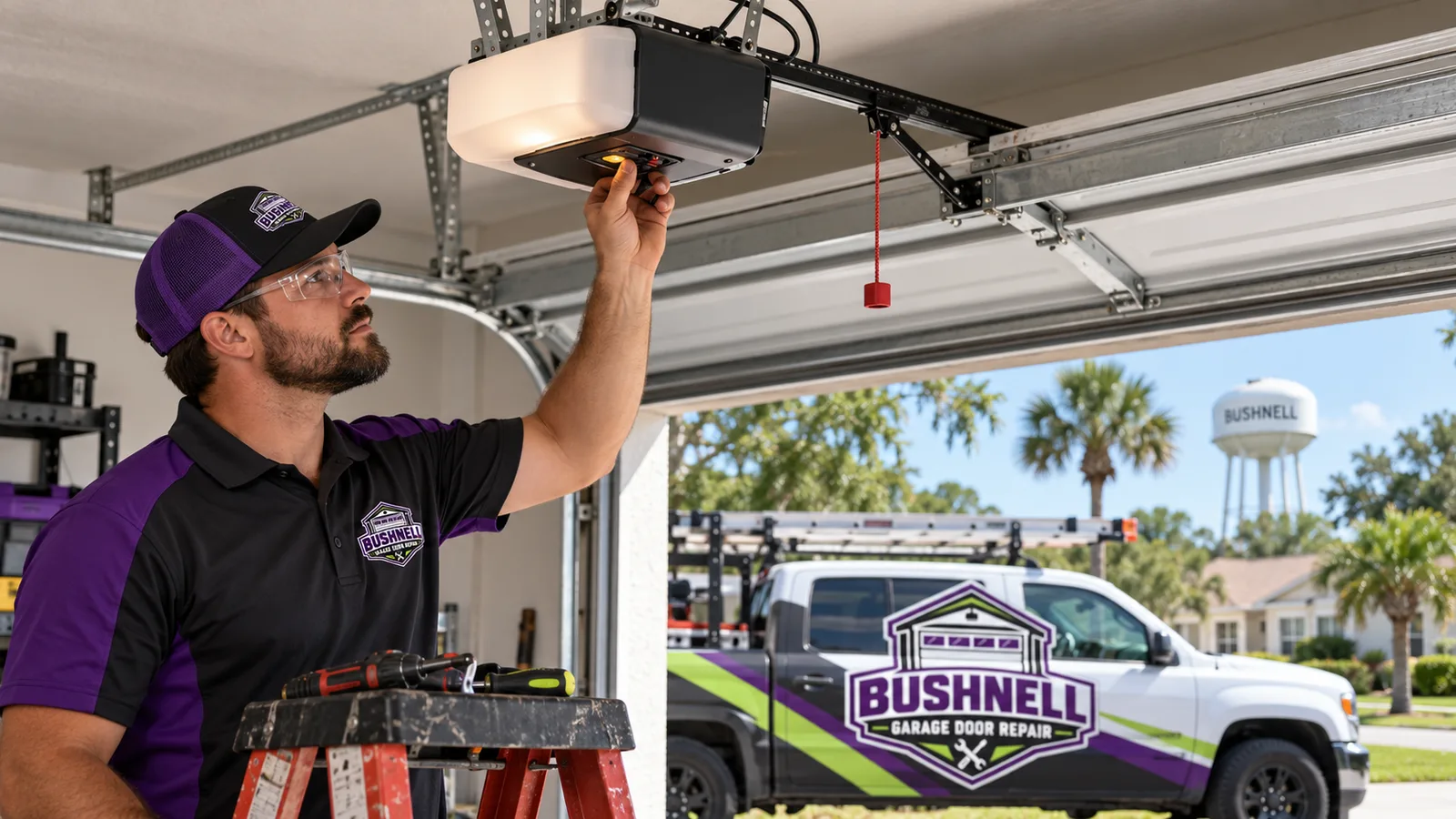
Get a clear diagnosis for an opener that hums, stops, reverses, blinks or ignores its controls.
When the motor runs but the door stays put, repeated button presses rarely solve the underlying problem. Garage door opener repair in Bushnell, FL starts by separating an opener fault from a door problem. I check the operator, controls, safety system and door movement before recommending work.
A garage door opener moves a properly balanced door; it is not meant to overcome a broken spring, binding rollers or damaged track. That distinction matters because replacing an opener will not correct a heavy or jammed door. If the problem is mechanical rather than electrical, garage door repair in Bushnell may be what the door needs instead.
Florida heat and humidity can be hard on electronics, while thunderstorms and power interruptions can affect control boards and programming. Those conditions do not prove that a circuit board has failed. Testing the outlet, controls, sensors and door by hand helps narrow the cause before parts are considered.
A disconnected trolley, stripped internal gear, failed drive component or door that cannot move freely may cause this symptom. The door and opener should be tested separately.
Misaligned photo eyes, blocked sensor paths, damaged wiring or incorrect travel and force settings can interrupt closing. A flashing opener light often provides a diagnostic code.
The cause may be a weak battery, lost programming, radio interference, an incompatible control or a receiver problem. Each control is tested against the wall station.
A defective wall control, loose low-voltage connection or lock mode can prevent normal operation. Testing should begin before the button or opener is replaced.
Worn drive parts, incorrect travel limits or resistance in the door can overload the operator. Continued use can turn a limited repair into broader damage.
Blink patterns can point to sensor, travel or control faults. A light that stays on may instead involve the wall control, light settings or logic board.
The opener should be disconnected at the emergency-release handle so the door can be moved by hand. A balanced door should travel smoothly and remain reasonably controlled through its range. A door that feels unusually heavy, drops or binds needs mechanical attention before the opener is judged.
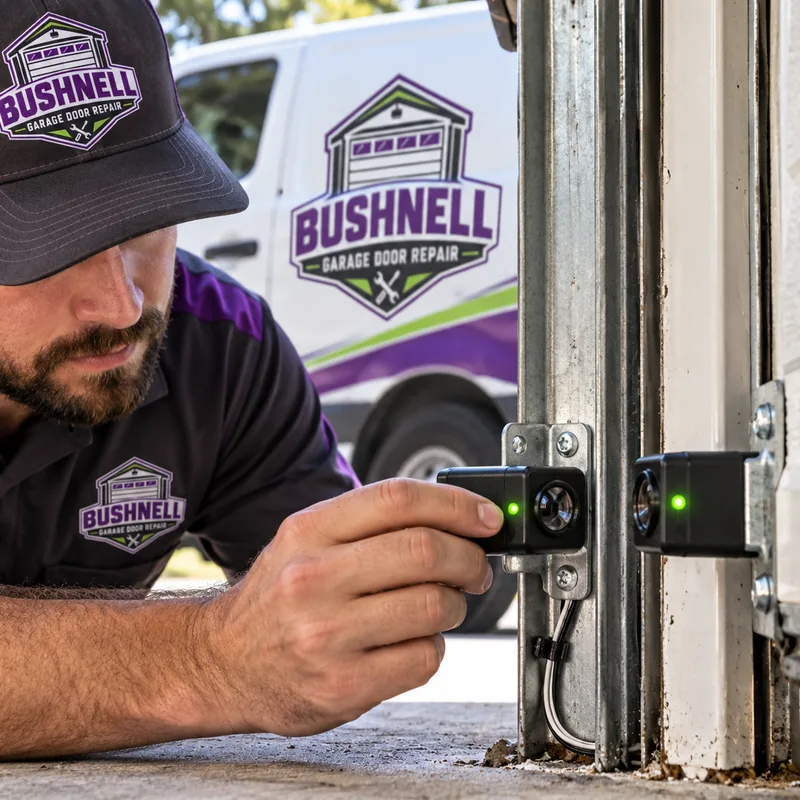
Next comes the electrical and control check. That may include confirming power at the outlet, inspecting the power cord, testing the wall station, checking remote response and reading the operator's diagnostic flashes. Photo-eye sensors near the floor are checked for alignment, clean lenses, steady indicator lights and intact low-voltage wiring.
The final checks depend on the opener type. Chain-drive, belt-drive and screw-drive units have different wear points. Technicians may inspect the trolley, carriage, sprocket, gear assembly, travel module, capacitor or logic board as applicable. I use the observed failure to determine whether adjustment, programming, wiring work or a component repair makes sense.
Step 1 of 5
Share what happens when the wall button or remote is pressed, including motor sounds, blinking lights, partial travel and whether the fault is intermittent.
Step 2 of 5
I check manual door movement before testing the opener. This prevents a spring, roller or track problem from being mistaken for operator failure.
Step 3 of 5
Power, wall controls, remotes, keypad operation, sensor alignment and visible wiring are checked. Diagnostic lights or error codes are interpreted for the specific unit.
Step 4 of 5
The findings should identify the failed part, the work needed and whether the condition of the unit makes repair worthwhile. Replacement is considered when repair is unavailable or poor value.
Step 5 of 5
After work, the door is cycled and the controls are tested. The photo-eye reversal system is also checked before the opener returns to use.
A short description of the sound, light pattern and door movement can help prepare the right diagnostic approach for your opener.
Photo-eye alignment, lens condition, mounting and low-voltage wiring may be checked when the door reverses or will not close.
Wall stations, handheld remotes, keypads, lock mode and receiver response can be tested before controls are replaced.
Travel limits and force behavior may need evaluation when the door stops short, reverses or presses too firmly at the floor.
The trolley, carriage, chain, belt, screw drive, sprocket or internal gear assembly may be inspected according to opener type.
Power supply, visible wiring, capacitors, travel modules and logic boards may be considered after basic power and control faults are ruled out.
A humming opener may have a stripped gear, failed capacitor, jammed drive part or a door it cannot move. Disconnecting the trolley and checking the door by hand helps distinguish operator failure from a heavy, binding or mechanically damaged door.
A closing door often reverses because the photo-eye beam is blocked or the sensors are misaligned, but excess resistance and incorrect travel settings can also cause reversal. In Bushnell garages, lenses should also be checked for dust, moisture and small debris before settings are changed.
The photo-eye safety system should not be bypassed for normal operation. Sensors mounted near the floor are designed to stop or reverse closing when the beam is interrupted. The safe repair is to correct alignment, wiring, mounting or sensor failure.
Yes, a remote-only fault can often be diagnosed without replacing the opener. Battery condition, programming, compatibility and radio interference should be checked, then the remote's response can be compared with the wall control and any other transmitters.
A normal outage does not always erase programming, but a surge or control-board fault can disrupt settings or damage electronics. After power returns, confirm the outlet works and check whether the wall control is in lock mode before attempting to reprogram remotes.
Provide the opener brand and model if visible, along with the exact symptom and any blinking-light pattern. I can also use details such as whether the wall control works, whether the remote works and whether the door moves manually.
Tell me what the opener does when you press the control. A focused inspection can identify whether the trouble is in the operator, sensors, wiring, remote or door.