Broken Spring
A loud snap, a visible gap in a torsion spring, or a door that suddenly feels too heavy often points to spring failure. The opener should not be used to lift a door with a broken spring.
Serving Bushnell, Florida
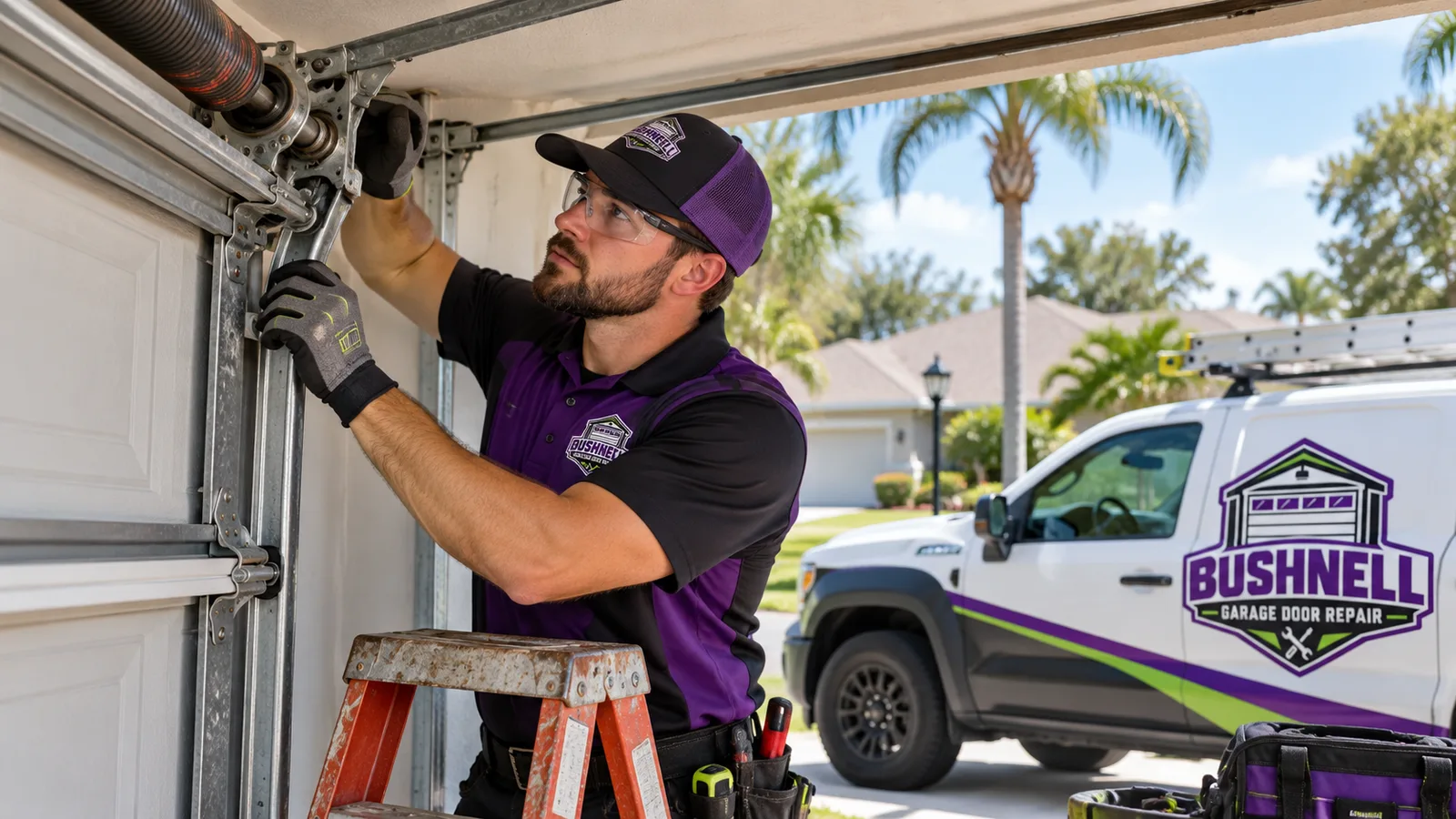
Get a jammed, crooked, noisy, or unresponsive garage door assessed before added movement causes more damage or leaves your property unsecured.
When a garage door traps a vehicle, will not close, or hangs unevenly, I handle emergency garage door repair Bushnell FL property owners can request for failed springs, loose or broken cables, damaged rollers, bent tracks, opener faults, and doors that have come off track.
Stop using the door if it is crooked, unusually heavy, partly detached, or supported by a loose cable. Do not pull the emergency release while the door is open unless its weight is safely controlled. A garage door can weigh hundreds of pounds, and its torsion or extension springs store enough energy to cause serious injury. Keep people, pets, and vehicles clear until the system has been inspected.
Central Florida heat, humidity, wind-driven rain, and storm debris can be hard on exposed hardware and electrical components. A repair visit should identify the failed part as well as related damage, such as a frayed cable caused by a seized bearing or a roller displaced by a bent track. For planned maintenance and nonurgent faults, garage door repair in Bushnell can address the issue before it becomes an access problem.
A loud snap, a visible gap in a torsion spring, or a door that suddenly feels too heavy often points to spring failure. The opener should not be used to lift a door with a broken spring.
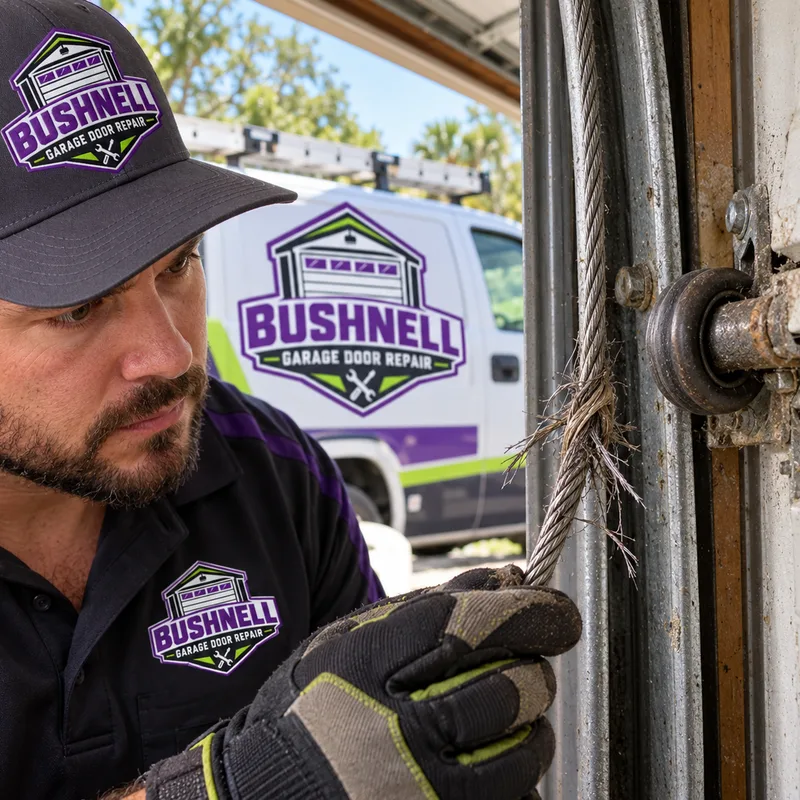
A cable may fray, unwind from its drum, or break. The door can tilt and bind because one side is no longer carrying its share of the load.
Impact, a failed roller, or cable trouble can pull the door out of its tracks. Operating it again may bend panels, distort the track, or allow the door to fall.
Photo-eye alignment, track obstructions, damaged sections, limit settings, and opener faults can prevent closing. A door that cannot secure the garage should be diagnosed.
Spring, cable, roller, track, lock, or opener failures can stop travel. Diagnosis should start with the door's condition rather than assuming the motor is at fault.
A vehicle strike or wind-blown debris may bend a track, damage a panel, or move hardware out of alignment. The door should be stabilized before repair options are considered.
Disconnect wall controls or remotes if accidental activation is possible, and keep the opening clear. If the door is fully closed, leave it closed. If it is partly open or visibly unstable, do not stand or walk beneath it. Avoid trying to straighten a track, reset a cable, or loosen spring hardware.
If the opener runs but the door does not move, stop pressing the control. Repeated operation can overheat the motor or damage the trolley and drive components. If the door reverses immediately, check only for an obvious object in its path. Do not bypass the photo-eye safety system.
During Florida thunderstorms, avoid touching wet electrical equipment. If water has reached the opener, outlet, controls, or wiring, leave the equipment alone until the area is safe. Useful details for the service request include whether the door is open or closed, whether a vehicle is trapped, what sound occurred, and whether any hardware is hanging loose.
Step 1 of 5
Tell me whether the door is stuck open, closed, crooked, off track, or blocking a vehicle. Mention an impact, loud snap, burning smell, visible gap in a spring, or loose cable.
Step 2 of 5
The door is checked before powered movement is attempted. Inspection may include springs, cables, drums, bearings, rollers, hinges, tracks, brackets, panels, opener connections, photo eyes, and controls.
Step 3 of 5
The failed component and any related damage are explained. If a complete repair cannot be made safely with the appropriate parts, the immediate priority is stabilizing or securing the opening and planning the follow-up work.
Step 4 of 5
Approved work is completed with parts suited to the door and hardware. Spring work requires matching the spring to the door's weight and geometry rather than selecting it by appearance alone.
Step 5 of 5
The finished system is checked through its operating cycle. Balance, track movement, cable seating, limits, force behavior, photo-eye reversal, and manual release operation are evaluated as applicable.
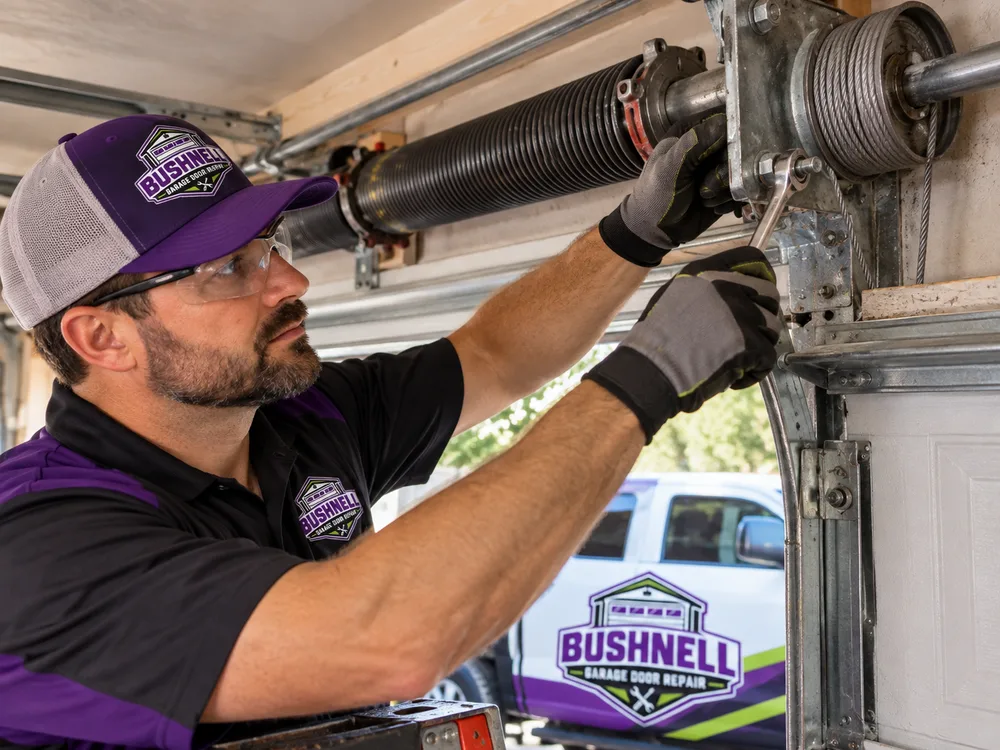
Many garage door symptoms have more than one possible cause. A door that will not lift may have a broken spring, a locked door, a disconnected trolley, or an opener fault. A crooked door may have a broken cable, a cable off its drum, a seized roller, or track damage. Reconnecting the opener or forcing the door can hide the symptom briefly while increasing the damage.
Spring systems deserve particular care. Torsion springs are mounted on a shaft above the opening, while extension springs run alongside the horizontal tracks. Both store mechanical energy. Replacement requires the correct spring specifications, secure winding or tensioning methods, and a final balance test. Cable drums, center bearings, end bearings, bottom fixtures, and shaft condition may also affect the repair.
Opener diagnosis should include the door itself. A motor cannot compensate for a poorly balanced door, binding rollers, or damaged track. Once the door moves correctly by hand under controlled conditions, the opener's travel limits, force response, trolley, drive system, controls, and safety sensors can be evaluated.
Bushnell properties with detached garages, attached residential garages, workshops, and outbuildings can use doors of different sizes and hardware configurations. Accurate details about the opening help with preparation, especially when the door is unusually wide, tall, insulated, or fitted with commercial-style hardware.
Florida weather also affects how the repair is done. Humid conditions can promote corrosion on fasteners, cables, bearings, and track surfaces. Wind-driven debris can strike panels or shift track alignment, while a power interruption may leave an opener unavailable even though the door itself remains mechanically sound. After severe weather, look from a safe distance for bent tracks, displaced rollers, loose brackets, damaged panels, or wet electrical components.
I focus the emergency visit on restoring safe operation or securing the opening when a full repair requires a later step. The right outcome depends on the door's condition, the availability of correctly matched parts, and whether structural attachment points remain sound. Clear information about the failure helps set realistic expectations before work begins.
A stuck or unstable garage door can become more expensive and more dangerous when it is repeatedly operated. Arrange an assessment before trying the controls again.
CALL NOW: (352) 677-2112A garage door with a broken spring should remain closed unless a trained technician determines that it can be moved safely. The door may be extremely heavy, and using the opener can damage its motor or trolley. If a vehicle is trapped at a Bushnell property, mention that when arranging service so the access problem is clear.
Paired springs are commonly evaluated together because they usually perform the same cycles, but whether to replace both depends on the system's condition and specifications. The technician should identify the spring dimensions, wire size, wind, and door weight before recommending replacement. A balanced door, not visual similarity alone, confirms that the spring setup is appropriate.
An off-track door should not be pushed, pulled, or powered back into position. A loose cable, damaged roller, bent track, or impact may leave the door unstable. Keep the area clear and arrange emergency garage door repair in Bushnell so the door can be secured before its hardware is reset or replaced.
The cause may be an obstruction, misaligned photo eyes, incorrect travel settings, binding hardware, or damage that prevents full closure. Remove only obvious objects from the floor and gently clean the sensor lenses if they are dry and accessible. Do not bypass the sensors, since they are part of the opener's safety system.
Mechanical repairs may still be possible during an outage, but electrical testing can be limited until power is safely restored. Do not handle an opener or outlet exposed to water. Manual operation should be attempted only after the door, springs, cables, and tracks are confirmed safe.
A complete replacement is not automatic after an impact; whether repair is possible depends on panel damage, track alignment, hardware condition, and the door's ability to move safely. A bent replaceable component may permit repair, while severe section damage or compromised attachment points can change the scope. An on-site inspection determines the best option.
Tell me what the door is doing, whether the opening is secure, and whether a vehicle is trapped. That information helps define the immediate priority and the equipment that may be needed.