
Opening and Framing Review
The opening is measured at several points and checked for level, plumb, usable headroom, side clearance, ceiling obstructions, and sound mounting surfaces.
Serving Bushnell, Florida
Replace a rusted, storm-damaged, or worn-out door with a properly fitted steel or insulated model, complete with the tracks, springs, and hardware needed for dependable operation.
Garage door installation in Bushnell, FL starts with the opening, not a door picked by appearance alone. I check the opening width and height, headroom above the door, side room near the jambs, backroom along the ceiling, and the condition of the framing. Those measurements determine which door, track configuration, spring system, and opener setup will fit.
A complete replacement may include the door sections, vertical and horizontal tracks, torsion or extension springs, rollers, hinges, cables, bottom seal, perimeter weatherstripping, and supporting hardware. Reusing worn or mismatched parts can affect balance and travel, so each component should be evaluated as part of one operating system.
Bushnell is in inland Central Florida, where heat, humidity, heavy rain, and wind-driven debris can be hard on exterior materials. Galvanized steel, a durable factory finish, intact weather seals, and correctly fastened tracks all matter. Wind resistance is also a product-specific rating, not a claim that should be assumed from the door's weight or panel thickness. The selected model and installation should match the requirements that apply to the property.
Steel doors are a sensible choice for many homes because they are available in numerous panel designs, colors, window layouts, and construction levels. The real comparison is deeper than appearance. A single-layer door has a steel exterior skin. Multi-layer construction may add insulation and an interior backing, producing a more finished inside surface and a stiffer section.
Insulation can reduce heat transfer through the door and may help moderate temperatures in a garage exposed to Florida sun. It can also make panels feel more solid during operation. Insulation types commonly include polystyrene panels and polyurethane foam. Their stated R-values are useful for comparing models, but the whole opening also depends on the seals around and beneath the door.
Windows add daylight but change privacy, weight, and design. Decorative hardware affects appearance rather than structural performance. I can help compare these choices against the opening, garage use, and exterior exposure before materials are selected.
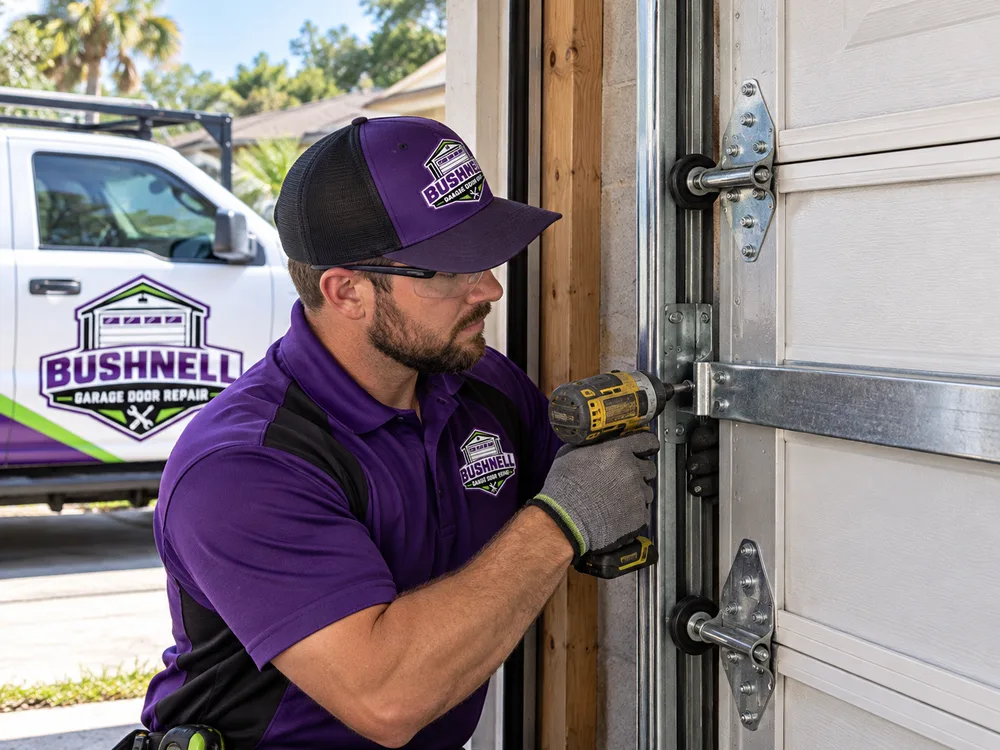
The opening is measured at several points and checked for level, plumb, usable headroom, side clearance, ceiling obstructions, and sound mounting surfaces.
Door sections and track radius must match the available space. Correct track spacing helps rollers travel without binding or pulling the door out of alignment.
Springs are selected for the actual weight and geometry of the door. Proper balance lets the door stay near mid-travel when operated manually.
Rollers, hinges, lift cables, brackets, fasteners, and bearing components are installed or matched to the new assembly rather than assumed compatible.
A bottom seal closes against the floor while perimeter stops limit gaps along the sides and top. Floor condition can affect how evenly the lower seal contacts.
If an opener remains in use, its rail position, travel limits, force settings, attachment point, and safety reversal system must suit the new door.
Step 1 of 5
I record the finished opening dimensions and available clearances, then check the jambs, header, ceiling area, floor, and existing equipment.
Step 2 of 5
The door size, steel construction, insulation, design, windows, track type, spring system, seals, and relevant product ratings are matched to the property and intended use.
Step 3 of 5
The planned materials and work are identified before installation, including whether the existing door and hardware will be removed and whether the opener can be retained.
Step 4 of 5
Tracks are positioned, door sections are assembled, cables and springs are fitted, and the system is adjusted so the door moves smoothly and remains properly balanced.
Step 5 of 5
The installer checks manual travel, fasteners, cable position, seal contact, opener limits, photo-eye alignment, and automatic reversal before reviewing normal operation with the customer.
Get the opening measured and the door specification settled before ordering, so the tracks, springs, hardware, and opener setup are planned as one complete installation.
A dented panel or worn roller does not automatically mean the entire door must be replaced. Replacement makes more sense when corrosion has spread through multiple sections, the door is badly warped, storm impact has distorted the assembly, replacement panels are unavailable, or several major components are nearing the end of service at the same time.
Changing the door is also an opportunity to address persistent gaps, poor panel alignment, limited insulation, or a design that no longer suits the building. If the existing door remains structurally sound and the problem is confined to a serviceable component, garage door repair in Bushnell may be the more proportionate choice.
Do not attempt to loosen bottom brackets, lift cables, or wound springs while evaluating an old door. These components can remain under substantial tension even when the door will not move. A hands-on inspection is the safe way to determine whether repair or full installation is appropriate.
A garage door can look straight while still being poorly balanced or incorrectly spaced in the tracks. The installer should check roller movement throughout the full cycle, cable seating on the drums, spring tension, track fastening, hinge alignment, and clearance between moving parts. With the opener disconnected, a balanced door should move by hand without racing upward or dropping heavily.
The bottom seal needs consistent contact with the floor, but the door should not be forced hard against the slab to compensate for an uneven threshold. Side and top weatherstripping should touch the door lightly rather than drag against it. These adjustments help limit rain, dust, insects, and daylight around the opening without interfering with travel.
An automatic opener also requires safety checks after the new door is installed. Photoelectric sensors should be aligned near the floor, and the opener's travel and force settings should be adjusted for the replacement door. The opener moves the door; it should not compensate for an unbalanced spring system.
An insulated door is worth considering when the garage receives strong sun, shares walls or a ceiling with conditioned rooms, is used as a workshop, or would benefit from stiffer panels. Central Florida heat makes thermal performance relevant, but insulation level, perimeter sealing, windows, and garage ventilation all affect the result.
An existing opener can sometimes remain if it is in suitable condition and compatible with the replacement door's size, weight, height, and travel. The rail, header attachment, arm geometry, safety sensors, limits, and reversal settings must be checked. An opener should never be used to overcome a door that is improperly balanced.
A complete installation commonly includes tracks, springs, cables, rollers, hinges, brackets, seals, and fasteners matched to the new door, but the written scope controls what is included. I can identify which components need replacement after examining the opening and current equipment.
The required product rating depends on the property, opening, applicable building requirements, and approved door specification. Florida wind-load compliance is specific to the tested door assembly and its installation details. Ask for the relevant product documentation and confirm requirements before ordering.
Minor floor variation may sometimes be managed with the correct bottom seal, but a pronounced slope, crack, or depression can leave gaps and affect closure. The slab and opening should be checked during measurement so the expected seal contact and any needed correction are clear before installation.
Tell me what is wrong with the current door and how the garage is used. I will measure the opening, compare suitable steel and insulated options, and define the work before materials are ordered.